Picking Sides: How the Nintendo-Sega-Atari Rivalry Defined a Generation of American Gamers
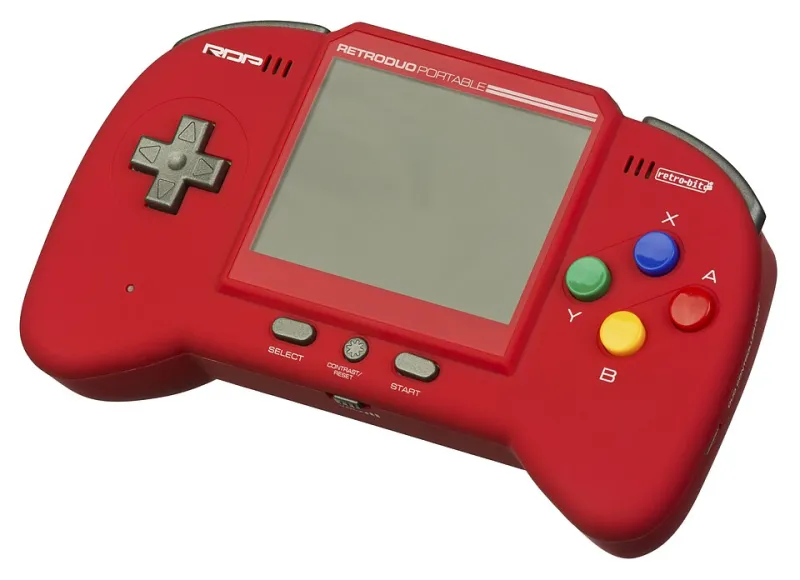
Photo: Evan-Amos, Public domain, via Wikimedia Commons
Ask any American who grew up between 1983 and 1996 which console they had, and watch what happens. Their eyes light up. Maybe they get a little defensive. There's a decent chance they still have opinions — strong ones — about whether Blast Processing was real or marketing nonsense, or whether the SNES controller was the pinnacle of human ergonomic achievement. That kind of passion doesn't come from nowhere. It was manufactured, nurtured, and amplified by one of the most entertaining corporate slugfests in entertainment history.
The console wars weren't just a business story. They were a cultural phenomenon that shaped how an entire generation understood loyalty, identity, and what it meant to be a "gamer" in America.
Atari's Rise and Fall: The Warning Shot
Before Nintendo or Sega entered the American living room in any serious way, Atari owned the space. The Atari 2600 was the home gaming machine of the late '70s and early '80s, and for a while, it felt untouchable. Kids across the country were playing Space Invaders and Pitfall! on chunky wood-paneled consoles, and parents were actually buying in.
Then came 1983. The great video game crash hit the US market like a freight train, and Atari's reputation took most of the damage. Oversaturated store shelves, a catastrophically bad port of Pac-Man, and the infamous E.T. the Extra-Terrestrial cartridge — a game so poor that thousands of unsold copies were literally buried in a New Mexico landfill — gutted consumer confidence. Retailers started pulling gaming products off shelves entirely.
Atari never fully recovered its throne. But the crash did something important: it cleared the stage for a new act.
Nintendo Rewrites the Rules
When Nintendo launched the Nintendo Entertainment System in the US in 1985, the company knew it had a perception problem. Americans had just been burned by bad games. So Nintendo did something clever — they marketed the NES not as a video game console, but as an "entertainment system" that came bundled with R.O.B., a robot peripheral designed to make the whole package look more like a toy than a gaming device.
It worked. The NES exploded. Super Mario Bros. became a cultural touchstone. The Legend of Zelda introduced American kids to the idea that a video game could be a genuine adventure. Nintendo's seal of quality — a gold sticker that promised every licensed game met certain standards — rebuilt trust in the medium almost single-handedly.
By the late '80s, Nintendo had a near-monopoly on American gaming culture, and they knew it. Strict licensing agreements kept third-party developers from releasing games on competing platforms. Nintendo Power magazine turned into a subscription-based hype machine. The company wasn't just selling games; it was selling a lifestyle.
Sega Draws Blood
If Nintendo was the establishment, Sega was the scrappy upstart that showed up to the party with a leather jacket and a chip on its shoulder. The Sega Genesis launched in the US in 1989, and Sega's marketing team immediately identified Nintendo's weakness: Nintendo was for kids. Sega was for everyone else.
"Genesis does what Nintendon't" remains one of the most aggressive and effective advertising slogans in gaming history. It wasn't subtle, but it didn't need to be. Sega leaned hard into edgier content — a bloodier version of Mortal Kombat that Nintendo famously censored, sports games with attitude, and Sonic the Hedgehog, a mascot specifically designed to be faster and cooler than Mario.
The strategy worked well enough to give Nintendo a genuine fight. By the early '90s, American schoolyards were genuinely divided. You were a Nintendo household or a Sega household, and that distinction mattered in ways that seem almost absurd in retrospect. Friendships were formed — and sometimes strained — over those allegiances.
The Culture Wars Behind the Console Wars
What made this rivalry so sticky wasn't just the games themselves. It was the communities that formed around each platform. Nintendo kids traded tips through Nintendo Power and crowded around rental store displays. Sega kids bonded over Sonic speed runs and the thrill of playing games their parents thought were too violent.
Video game magazines like EGM, GameFan, and GamePro fanned the flames beautifully. Every issue carried comparison reviews, letters from passionate readers defending their console of choice, and preview coverage that made the next big exclusive feel like the most important event in human history. This was pre-internet fan culture operating at full volume.
Regional differences played a role too. In some parts of the country, Sega had a stronger retail presence. In others, Nintendo was so dominant that owning a Genesis felt genuinely countercultural. These micro-communities created memories that are incredibly specific — the smell of a particular rental store, the exact shade of gray on an NES cartridge, the satisfying click of a Genesis controller.
The 16-Bit War's Legacy
By the time the Super Nintendo and the Genesis were going head-to-head in the early '90s, the console wars had matured into something more sophisticated. Both companies were pushing hardware limits, courting major third-party developers, and producing games that genuinely rivaled each other in quality. Super Metroid versus Phantasy Star IV. Street Fighter II Turbo versus Mortal Kombat II. The arguments were legitimate because both platforms were legitimately excellent.
Atari made a few more swings — the Atari Lynx, the Jaguar — but never recaptured its former dominance. The battle was between two giants now, at least until Sony showed up with the PlayStation and changed the game entirely.
Why It Still Matters
The console wars of the '80s and '90s didn't just produce great games. They produced a generation of passionate, opinionated, deeply invested gamers who learned to care about the medium in a way that still drives the retro collecting and nostalgia community today. That battered copy of Sonic the Hedgehog 2 at a garage sale isn't just a game — it's a memory of being ten years old and absolutely certain that Sega was better.
The nostalgia you feel flipping through a box of old cartridges at a flea market? That's the console wars' most lasting legacy. They made us care. And honestly, we never really stopped.