One Cabinet, One Quarter, One Champion: The Corner-Store Gaming Scenes That Built Rivalries Before Arcades Took Over
Photo: Robert Ashworth from Bellingham, WA., USA, CC BY 2.0, via Wikimedia Commons
Every neighborhood had one. Maybe it was Sal's Pizza on the corner of Maple and 5th, or the gas station off the highway exit where somebody's uncle decided a Pac-Man cabinet would look good next to the beef jerky rack. One machine. One screen. And a rotating cast of kids who all knew exactly who the best player on the block was — because they'd all lost to him.
Before the arcade boom scattered us into dark rooms full of glowing cabinets, gaming rivalries lived in these small, unofficial venues. And honestly? Those were the most personal battles any of us ever fought.
The Cabinet in the Back of the Pizza Place
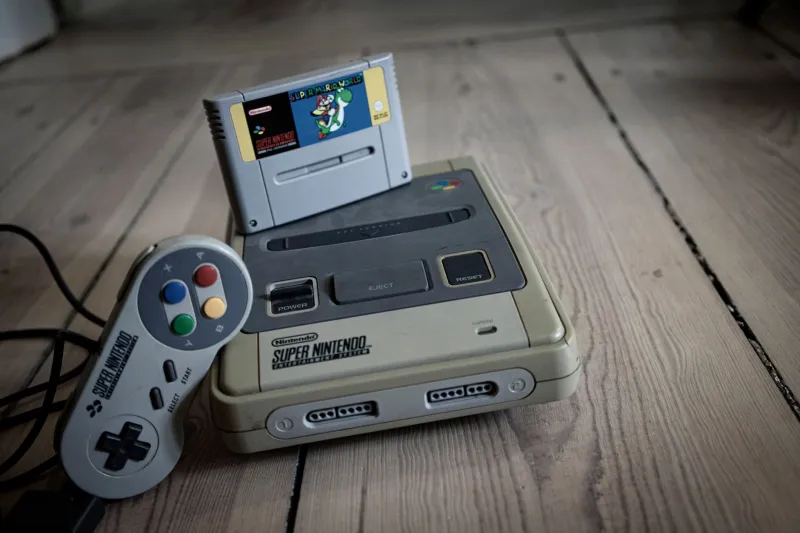
The setup was never glamorous. A single cocktail cabinet wedged between the cigarette rack and the bathroom door. A CRT bolted behind the counter with a donated NES wired to a switch that flipped between the security camera and Super Mario Bros. The owner didn't buy it to make money — a quarter here, a quarter there barely covered the electric bill. They bought it because kids who stuck around were kids who bought slices and sodas.
"Best business decision I never meant to make," laughs a guy we'll call Ray, who ran a sub shop in Ohio through the late '80s. "I put a Donkey Kong in there thinking it'd be a novelty. Within a month I had twenty kids a day in here. Some of them barely bought anything. But their older brothers? Their parents picking them up? Everybody ordered something eventually."
Ray's shop became famous in a six-block radius for one reason: a fifth-grader named Denise who could clear more of Donkey Kong's girders than any kid in the grade school. She'd show up after school, plant herself in front of the cabinet with a slice of pepperoni, and hold court until her mom's station wagon pulled up outside.
"The boys could not stand it," Ray remembers. "But nobody beat her. Nobody."
Rules of the Street
These informal gaming scenes ran on an unwritten rulebook that every kid seemed to inherit through osmosis:
- Winner stays on. Lose, and you hand over the controller and your dignity.
- The owner's kid always got an extra credit. Nobody questioned it. It was rent.
- You watched quietly. Trash talk happened between rounds, never mid-run.
- The machine was sacred. You tilted it, you answered for it.
That last rule mattered more than any of us understood at the time. These machines belonged to someone — a shop owner who'd shelled out real money on a gamble. When a cabinet broke, it wasn't a landlord fixing it. It was a phone call to a repair guy two towns over, and sometimes it just never got fixed. Plenty of these setups died quietly and were wheeled into the storeroom, never to be seen again.
When the Arcade Split the World in Two
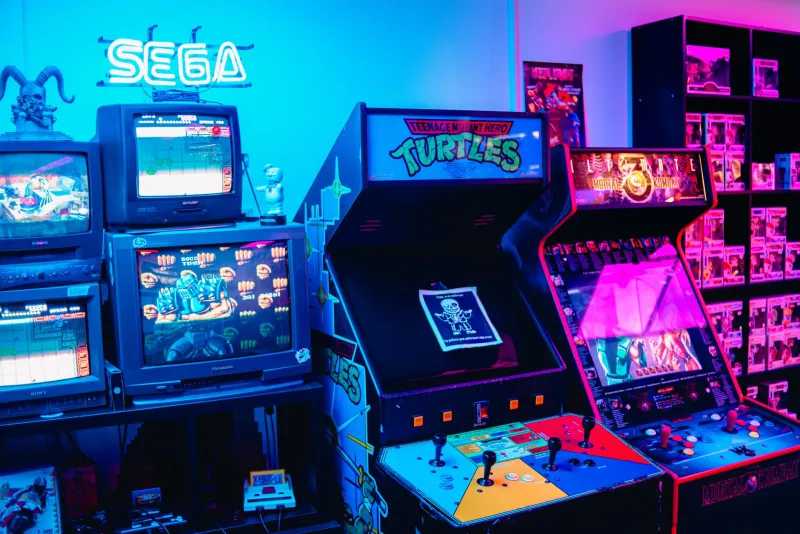
By the mid-'80s, dedicated arcades started pulling the crowd away. Suddenly you had forty cabinets under one roof, and the corner store's lone Galaga couldn't compete. But something got lost in that move, and the people who ran these little venues feel it most.
"At the arcade, you were nobody," Ray says. "In my shop, you were 'the Galaga kid.' Everybody knew your name and your high score. That arcade never gave you that."
He's right, and it explains why these memories stick so hard. The arcade standardized competition — leaderboards, tokens, house rules posted on the glass. The corner store made it local. Your rival sat next to you in math class. Your defeat was witnessed by people who'd bring it up at the lunch table tomorrow.
Home consoles dealt the final blow. Once a neighbor kid got an NES, the gathering spot shifted to somebody's rec room, and the shop cabinet went quiet. Ray sold his Donkey Kong in 1991 to a collector for less than he paid. "Should've kept it," he admits. "That thing's worth a fortune now."
What We Lost — and What We Kept
There's a reason retro gamers today chase down cocktail cabinets and bar-top units for their home setups. It's not just the games. It's trying to recreate that feeling of a machine that belonged somewhere — that anchored a room, a business, a whole social scene.
The rivalries we built in pizza parlors and corner stores were the purest form of gaming competition: no brackets, no online matchmaking, no spectators beyond whoever was waiting for their order. Just a quarter, a controller, and a name everybody on the block knew.
Somewhere out there, Denise is probably in her late 40s, and I'd bet she still thinks she's the best Donkey Kong player her old neighborhood ever produced.
She's right. Nobody ever proved otherwise.