Half Revolution, Half Betrayal: The Game Boy Color Still Can't Win With Everyone
There are debates in retro gaming that never really get resolved. Console wars. Cartridge blowing. Whether the SNES library actually beats the Genesis. And then there's the Game Boy Color — a device that should have been a celebration but somehow turned into a generational Rorschach test for what retro gaming is even supposed to mean.
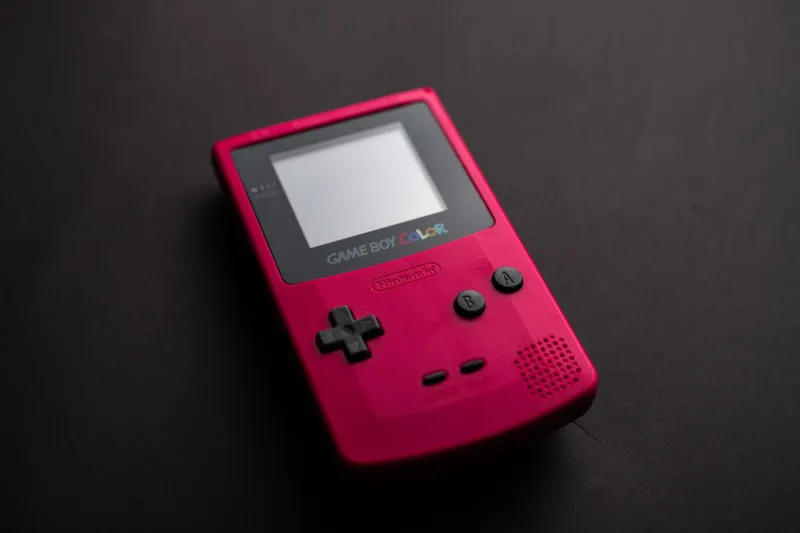
Nintendo released the Game Boy Color in November 1998 in North America, nearly a decade after the original brick launched in 1989. By that point, the original Game Boy had already survived the Sega Game Gear, the Atari Lynx, and the TurboExpress. It had done it without a backlight, without color, and without much more than a greenish screen and an unshakeable library. The Color was supposed to be the next step. For a lot of fans, it was. For others, it was the beginning of the end of something pure.
What Nintendo Was Actually Selling in 1998
Let's be honest about the context. By late 1998, the Game Boy was old. The original hardware design dated back to a world before the Super Nintendo even existed. The Game Boy Pocket had cleaned up the form factor in 1996, but it was still running the same monochrome show. Meanwhile, kids were playing Pokémon Red and Blue on those washed-out green screens and somehow not complaining — which tells you everything about how strong that software library really was.
The Color launched at $79.95, which was a reasonable ask. It brought a 32,000-color palette, double the processor speed, and — critically — backward compatibility with the entire existing Game Boy library. On paper, it was a sensible upgrade. Nintendo even created a tiered system: original Game Boy games displayed in limited color palettes on the new hardware, while Color-specific titles could push the hardware to its actual limits. Games like The Legend of Zelda: Oracle of Ages, Metal Gear Solid, and Pokémon Gold and Silver showed what the thing could really do.
So what's the problem?
The Purist Argument: Something Got Lost in the Translation
Ask any collector who leans toward the original Game Boy, and you'll hear a version of the same sentiment: the monochrome screen wasn't a limitation — it was the aesthetic. Those four shades of greenish-gray weren't a compromise; they were the look. Games were designed around them. The visual identity of titles like Tetris, Metroid II, and Kirby's Dream Land is inseparable from that palette.
When the Game Boy Color rendered original games in those auto-assigned color schemes, something got a little off. Nintendo let players choose from a handful of preset palettes when loading older games, which was a nice touch — but to purists, it felt like colorizing an old black-and-white film. Technically impressive, maybe. Faithful to the original vision? Debatable.
There's also a collector angle here that goes beyond aesthetics. The original Game Boy has a coherent, contained identity. Its library is finite, its hardware is iconic, and hunting down complete-in-box copies of original DMG games feels like archaeology. The Color muddied that water. With a backward-compatible system and games that existed in a weird middle ground — playable on both platforms but optimized for neither in some cases — the collecting categories got blurry in ways that still frustrate catalog purists today.
The Modernist Case: Color Was the Right Move
On the other side of this debate, you've got collectors and players who think the purist crowd is romanticizing inconvenience. The original Game Boy screen was genuinely hard to see. It had motion blur. It washed out in direct sunlight and disappeared in low light. The Color fixed real problems, and it did so without abandoning the library that made the platform worth saving in the first place.
The backward compatibility argument is actually huge here. Nintendo didn't ask fans to start over. Every cartridge you'd spent the previous decade collecting still worked. That's not a betrayal — that's respect for the install base. Compare that to transitions other companies made during the same era and Nintendo looks positively considerate.
There's also the library to consider. Pokémon Gold and Silver alone could justify the hardware's existence. Dragon Warrior Monsters, Shantae, Wario Land 3 — the Color's exclusive lineup holds up remarkably well, and it's a library that tends to be undervalued relative to its quality. Collectors who've started digging into GBC-exclusive titles in recent years have been genuinely surprised by what's there.
Where the Collecting Community Actually Stands
Here's what makes this debate interesting from a collecting standpoint: the market has essentially voted, and it hasn't voted cleanly. Original Game Boy hardware and complete-in-box DMG-era titles command serious premiums. The nostalgia factor is enormous, and the design — that chunky, utilitarian brick — has become genuinely iconic in a way that transcends the hardware itself. You see it on T-shirts, tattoos, and coffee mugs in ways the Color never quite achieved.
But Game Boy Color exclusives have been quietly climbing in value for years. Shantae is now one of the most expensive cartridges in the entire handheld market. The Color's library, once dismissed as a footnote between the original and the Game Boy Advance, has developed its own collector community with real passion behind it.
What the market seems to be saying is that both things can be true. The original Game Boy is a cultural artifact. The Color is an underappreciated piece of gaming history. They don't have to compete.
What This Debate Is Really About
If you step back, the Game Boy Color argument is really a proxy war for a bigger question the retro community wrestles with constantly: what counts as authentic?
Is authenticity about the original experience, preserved exactly as it was? Or is it about celebrating the full arc of a platform's history, messy transitions and all? There's no clean answer, and honestly, that's part of what makes retro collecting so endlessly interesting. The disagreements aren't a bug — they're a feature. They mean people care.
The Game Boy Color sits right at the fault line of that argument. It's not quite original, not quite modern. It's a bridge hardware — and bridge hardware almost always gets complicated legacies. Just ask anyone who owns a 32X.
Twenty-six years on, the debate hasn't been settled because it probably can't be. And that's fine. The Game Boy Color doesn't need everyone to agree on its legacy. It just needs to keep showing up in collections, on shelves, and in conversations — which, judging by the community's continued passion for the platform, it absolutely will.