Priced Out of the Past: How Retro Gaming Went From Bargain Bins to Black Markets

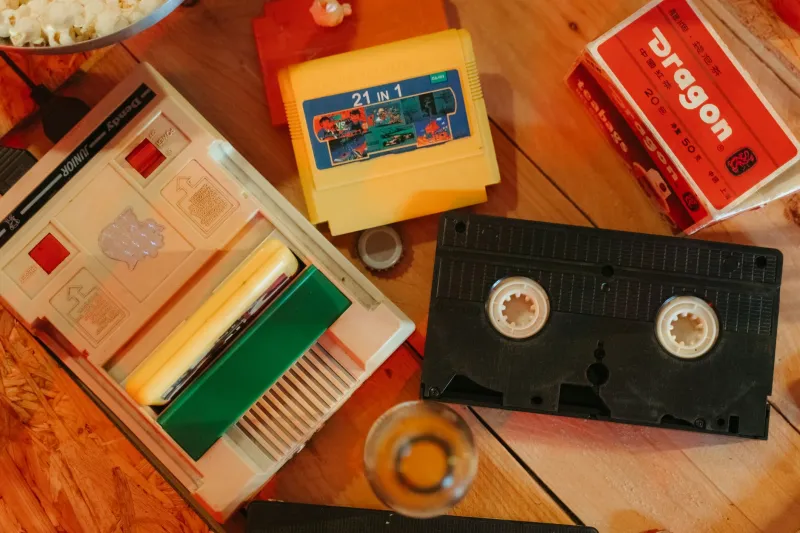
Photo by Photo by Nick Hamze on Unsplash on Unsplash
There was a time — not that long ago, honestly — when you could walk into a Goodwill, flip through a bin of old cartridges, and walk out with half your childhood for twenty bucks. Those days are mostly gone. And the reasons why are a lot more complicated than "things just got popular."
The retro gaming market has undergone a seismic shift over the last decade, and casual enthusiasts are feeling it hardest. The games that defined entire childhoods — the ones you remember renting on a Friday night or unwrapping on Christmas morning — are increasingly hard to find, strangely expensive when you do find them, and sometimes just... gone. Disappeared from circulation in ways that don't fully make sense unless you start pulling on a few threads.
So we did. Here's what we found.
The Supply Problem Nobody Talks About Enough
Let's start with the obvious: there are only so many physical copies of any given game in existence. No new Super Nintendo cartridges are rolling off assembly lines. Every copy of EarthBound that gets lost, damaged, or tossed in a landfill is one fewer copy available to the market forever. That's basic scarcity, and it's real.
But physical attrition alone doesn't explain the speed at which prices have climbed. A complete-in-box copy of EarthBound that might have sold for $150 in 2015 was routinely fetching $400 or more by 2022. Loose cartridges for mid-tier SNES RPGs that nobody was clamoring for a few years back are now listed in the $60–$100 range on eBay — and they're selling.
What changed? A few things hit simultaneously.
The pandemic sent millions of people back to their childhoods. Stuck at home, adults with disposable income and a wave of nostalgia started buying up old hardware and software at a pace the market had never seen. Demand spiked. Prices followed.
At the same time, a new class of buyer entered the scene — one less interested in actually playing the games.
When Collectors Become Speculators
There's a meaningful difference between someone who wants to own a piece of gaming history and someone who sees a cardboard box with a Nintendo logo as a financial asset. Both exist in the retro market now, and the latter group has had an outsized effect on availability.
Dealers and longtime collectors describe a pattern that's become frustratingly common: a game starts trending on social media or gets mentioned in a YouTube video, and within 48 hours, every affordable copy has been scooped up. Sometimes it's individual buyers acting fast. Sometimes it's coordinated — small groups of resellers monitoring trend signals and bulk-buying before prices adjust.
"I've watched it happen in real time," one Midwest-based dealer told us. "A streamer plays something obscure, the clip goes viral, and by Monday morning every copy on eBay has been relisted at two or three times what it sold for over the weekend. It's not organic."
This kind of speculative hoarding creates artificial scarcity. The games still exist — they're just sitting in climate-controlled storage rooms waiting for the right moment to be flipped, rather than in someone's collection getting actually played.
Licensing Limbo and the Disappearing Digital Shelf
Physical copies aren't the only thing getting harder to find. Licensing complications have quietly erased huge swaths of gaming history from legal digital channels, making it nearly impossible to access certain titles through any legitimate means.
Games tied to sports leagues, music rights, or movie franchises are especially vulnerable. When licensing deals expire, the games don't just stop being sold — they often can't be re-released at all without renegotiating contracts that involve dozens of stakeholders. A football game from 1994 might require clearing rights with the NFL, the players' union, individual athletes, and a defunct development studio. Nobody has the incentive or resources to untangle that.
The result is a growing catalog of titles that exist in a kind of legal gray zone — too encumbered to rerelease officially, too beloved to simply forget. Collectors hunting these games are entirely dependent on the physical market, which drives prices up further and gives resellers even more leverage.
The Thrift Store Pipeline Has Been Disrupted
For years, thrift stores were the great equalizer in retro collecting. Donated games would cycle through Goodwill or Salvation Army shelves at nominal prices, giving budget-conscious collectors a fighting chance. That pipeline has narrowed considerably.
Several major thrift chains now use pricing databases — the same ones dealers and collectors use — to value electronics and media donations. Walk into a Goodwill in most major US cities today and you're more likely to find a loose Super Mario Bros. 3 cartridge priced at $35 than the $4 you might have paid five years ago. The arbitrage opportunity that made thrift hunting so rewarding has largely evaporated.
Yard sales and estate sales still offer occasional deals, but even those have become more competitive. Sellers increasingly Google their items before pricing them. The information asymmetry that once favored knowledgeable collectors has flattened out.
What This Means for the Rest of Us
For hardcore collectors with deep pockets, the rising market is annoying but manageable. For the casual enthusiast — someone who just wants to replay the games they grew up with without taking out a small loan — the situation has become genuinely discouraging.
The irony is sharp: retro gaming culture is more popular and celebrated than ever, but the actual games at the center of that culture are becoming less accessible to the people who love them most.
There are workarounds, of course. Emulation remains the most practical solution for playing classic titles affordably, and modern handheld devices have made that experience more legitimate-feeling than ever. Official mini consoles from Nintendo and Sega offered curated libraries at reasonable prices, though their catalogs were limited and those products have largely been discontinued.
For those committed to original hardware, patience and strategy still matter. Regional markets vary significantly — rural areas and smaller cities often still yield better deals than major metros. Building relationships with local dealers, attending retro gaming expos, and trading within trusted communities can all help stretch a budget further than eBay ever will.
The Market Isn't Going to Cool Down on Its Own
Some collectors hold out hope that prices will eventually stabilize — that the speculative bubble will deflate once the pandemic-era nostalgia wave recedes. There's some historical precedent for that kind of correction in collectibles markets.
But the structural forces at play here — finite physical supply, expanding demand, licensing paralysis, and the professionalization of reselling — suggest the floor has been permanently raised. The $5 cartridge bin isn't coming back.
What we're left with is a hobby that demands more resourcefulness than it used to. The treasure hunt is still real, but the stakes are higher and the map has gotten a lot harder to read. For those of us who fell in love with these games the first time around, that's a bitter pill — but it hasn't stopped anyone from looking.