Friday Night at the Video Store: How Game Rentals Built Our Gaming Culture — Then Vanished Without a Trace
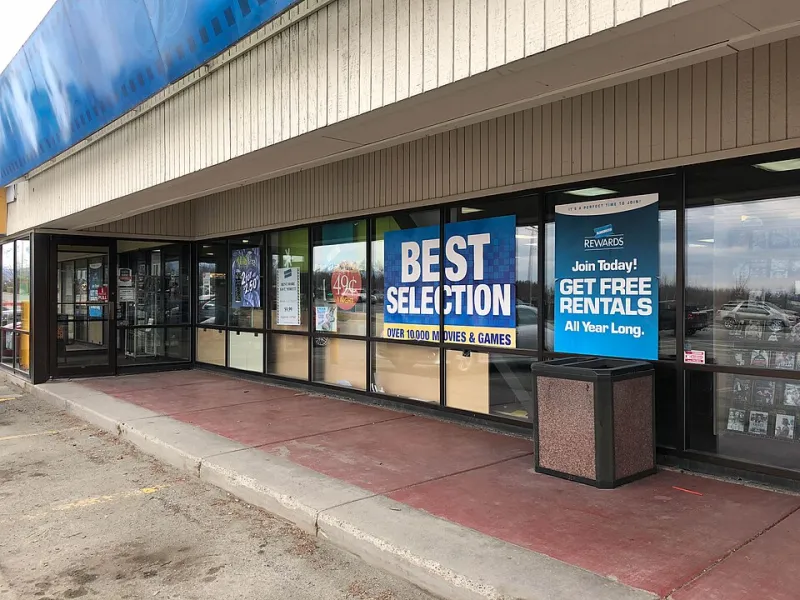
Photo: Jon Konrath from Oakland, USA, CC BY 2.0, via Wikimedia Commons
There's a specific kind of Friday night feeling that a certain generation of American kids will never fully shake. It started around 5 PM, usually in the backseat of a parent's car, stomach already buzzing with the low hum of anticipation. The destination wasn't a movie theater or a mall. It was the video rental store — and if you played your cards right, you were walking out with something for the TV and something for the Nintendo.
For kids who grew up between roughly 1985 and 2005, renting video games wasn't just a budget-friendly alternative to buying them. It was a whole culture. A ritual. And honestly? It shaped the gaming landscape in ways that most people haven't stopped to fully appreciate.
The Rental Economy Before Streaming Changed Everything
Before Game Pass, before PlayStation Now, before you could download a full title in the time it takes to microwave a burrito, the economics of gaming were brutal for kids. A new NES cartridge in the late '80s could run $50 or more — that's well over $100 in today's money. SNES and Genesis games pushed that ceiling higher. For most families, buying a new game meant waiting for a birthday or Christmas and hoping your parents didn't accidentally grab the wrong box.
Rental stores cracked that problem wide open. For somewhere between $2 and $5 a night, you could take home a game that would've cost a week of lawn-mowing money to own. You got the weekend, you played it until your eyes crossed, and you brought it back Monday morning. It wasn't ownership — but for a lot of kids, it felt even better. There was no pressure to justify the purchase, no long-term commitment. Just pure, concentrated gaming.
Blockbuster Video became the most visible face of that economy. At its peak in the late '90s, the chain had over 9,000 locations across the United States. Walking into one on a Friday evening meant navigating a wall of game boxes — the actual cartridges locked away behind the counter — while parents browsed the new release movies in the next aisle. It was sensory overload in the best possible way.
Mom-and-Pop Magic: The Stores That Blockbuster Couldn't Copy
Blockbuster gets most of the nostalgic airtime, but the real texture of rental culture lived in the independent stores. Every mid-sized American town had at least one: a local video shop with a handwritten sign, fluorescent lighting, and a game section that felt curated by someone who actually played games.
These places had personality that no corporate chain could manufacture. The guy behind the counter might tip you off that the copy of Castlevania III they just got back was actually pretty good, or warn you that their copy of Battletoads had the save battery dying. You built relationships with these places. You had a membership card with your name on it.
The selection at independent stores was also wonderfully unpredictable. You might find a Japanese import sitting in the wrong section, or stumble across a Genesis game you'd never heard of that turned out to be a hidden gem. Discovery was built into the experience in a way that algorithmic recommendation engines have never quite replicated.
The Scratch-and-Sniff Problem: Game Rentals and the Condition Question
Let's not romanticize everything, though. Renting games came with its own particular frustrations — frustrations that any veteran renter will recall with a mix of exasperation and dark humor.
Cartridges came back in various states of abuse. Instruction manuals were almost always missing, which for games that relied heavily on their manuals — looking at you, Zelda II — could leave you genuinely stuck. Save files were another issue. Nothing quite prepared you for the gut-punch of loading up a rental copy of an RPG and finding that some previous renter had logged 30 hours and saved over every available slot. On a weekend rental, that was your whole window gone.
Discs in the PlayStation and N64 era introduced new problems: scratches, skips, and the particular anxiety of a game that loaded fine at the store but froze on your TV at home. You'd call the store, they'd tell you to bring it back, and by the time you drove there and swapped it out, half your Saturday had evaporated.
But here's the thing — those friction points are part of the memory now. They're inseparable from the experience.
How Rentals Shaped the Canon
Here's something worth sitting with: the games that became classics in the collective memory of '80s and '90s kids were, in many cases, shaped by the rental market. A title that rented well got talked about at school on Monday. Word spread through a social network made entirely of in-person conversation.
Some games were practically designed around the rental window. Short, punchy gameplay loops. High difficulty that justified replay. A hook in the first twenty minutes that made you want to come back. Developers absolutely knew that a significant portion of their audience would only ever play their game for 48 hours, and they built accordingly.
This also meant that certain slower-burn games — deep RPGs, simulation titles, anything that required reading a manual — were at a disadvantage in the rental market. The games that thrived on rental shelves tended to be immediately accessible, visually striking, and just hard enough to make you feel like you were making progress without actually finishing the thing. Sound familiar? It's basically the design philosophy behind mobile games today, just discovered a couple decades earlier.
The Last Rewind: Why We Lost the Rental Store
The collapse of the video rental industry is well-documented in broad strokes. Netflix killed the DVD rental business. Digital distribution killed physical media sales. Blockbuster's famous refusal to buy Netflix for $50 million in 2000 became a business school cautionary tale. By 2013, the last corporate-owned Blockbuster locations were closing. Today, there's one left — a survivor in Bend, Oregon that's become something between a tourist attraction and a genuine community institution.
But the game rental market had its own specific death spiral. GameFly launched in 2002 and moved the rental model online, which was convenient but stripped out everything that made the experience feel alive. The social aspect, the browsing, the recommendations from a real human being who knew your taste — all of that evaporated into a queue on a website.
And then streaming and digital libraries finished the job. Why rent when you can subscribe?
What We're Actually Missing
The loss of the rental store isn't really about access to games. We have more access now than anyone in 1993 could have imagined. What's gone is the context — the shared physical space, the Friday-night ritual, the communal discovery of what was worth playing.
Game rental stores were, in their own low-key way, a form of community infrastructure. They were places where gaming culture was transmitted person-to-person, where you got recommendations from a stranger who turned out to have exactly your taste, where you took a gamble on something you'd never heard of because the box art looked cool and you had a couple bucks left on your membership.
That's not something a recommendation algorithm gives you. And it's not something that's coming back.
But it's absolutely worth remembering — because for a generation of American gamers, those stores weren't just where you got your games. They were where you became a gamer.