Cheat Codes Were a Feature, Not a Bug: How Classic Games Cracked the Accessibility Problem Wide Open

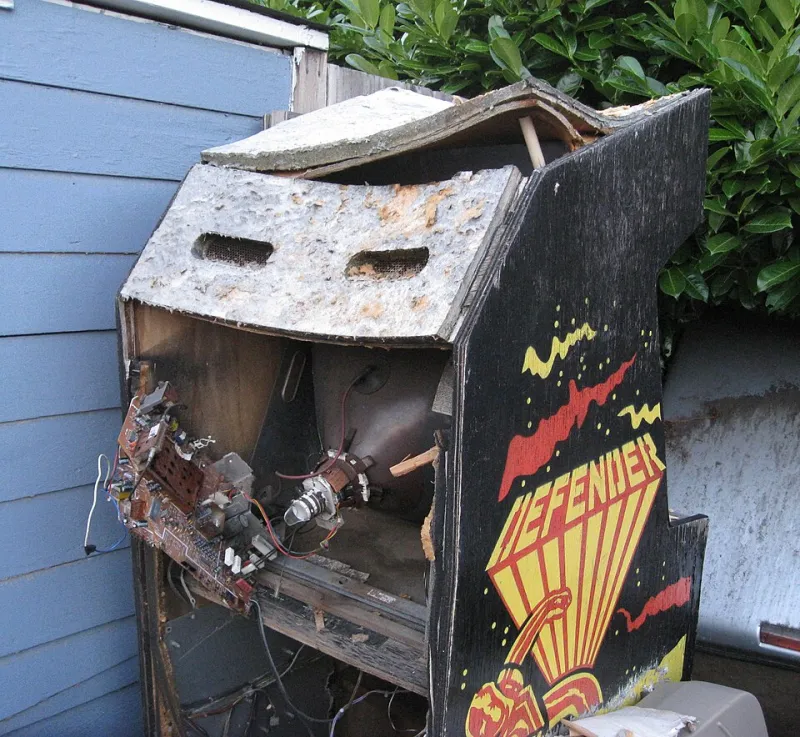
Photo: Nicholas, CC BY 2.0, via Wikimedia Commons
There's a moment burned into the memory of just about every kid who grew up gaming in the '80s and '90s. You're hunched over the controller, the TV glow cutting through a dark bedroom, and you punch in a sequence of buttons that absolutely should not work — and yet the game completely transforms. Extra lives appear. You skip to the final world. Suddenly the wall between you and the ending dissolves. That moment wasn't cheating. That was design.
The humble cheat code has been written off as a relic, a crutch for players who couldn't hack it. But spend any time thinking seriously about what those codes actually did for gaming culture, and a different picture emerges. They were, in many ways, one of the smartest player-experience decisions the industry ever stumbled into — and quietly abandoned.
The Code That Started a Religion
If you grew up with a Nintendo Entertainment System, you know the Konami Code without having to think about it. Up, up, down, down, left, right, left, right, B, A. It's practically muscle memory at this point. First appearing in Gradius in 1986 and reaching legendary status through Contra in 1988, the code gave players 30 lives and transformed one of the hardest games on the platform into something a regular kid could actually finish.
Here's the thing people forget: Contra without the code is genuinely brutal. Three lives, no continues, merciless enemy patterns. For a lot of American kids renting it from Blockbuster on a Friday night, the Konami Code wasn't optional — it was the only way the game was going to get finished before Sunday return time. Konami didn't patch it out. They shipped it intentionally. They wanted players to have that option.
That's a design philosophy worth sitting with for a second.
Passwords Were the Original Cloud Save
Not every classic game handed you a button sequence. Many of them used password systems — those long strings of letters, numbers, and symbols that you carefully wrote down in a notebook (or on the back of your hand, let's be honest) before turning off the console.
On the surface, passwords look primitive compared to today's automatic cloud saves. But they did something interesting that modern saves don't always replicate: they gave players agency over their progress in a tangible way. You could share a password with a friend across the street. You could look up passwords in Nintendo Power and jump straight to the level you actually wanted to play. You could trade them on the playground like baseball cards.
Games like Mega Man, Metroid, and Battletoads all leaned on password systems that became part of the social fabric around those games. The JUSTIN BAILEY password in Metroid — which started you mid-game with a full arsenal — became one of gaming's great urban legends, passed from kid to kid like a secret handshake. Whether it was intentional or a bizarre accident of the password generation system almost doesn't matter. It existed, players found it, and it gave them something to talk about.
The Game Genie Understood the Assignment
If built-in codes weren't enough, the Game Genie arrived in 1990 to fill the gap. Galoob's cartridge-based device let players enter codes that modified game behavior on the fly — infinite health, unlimited ammo, moon-jump physics. Nintendo famously tried to block its sale, arguing it damaged the integrity of their games. A federal court disagreed, and the Game Genie hit shelves anyway.
What's telling about that legal fight is the framing. Nintendo's position was essentially that players should experience games the way developers intended. The court — and millions of American kids — said something different: players should get to decide how they want to engage with software they purchased. The Game Genie wasn't piracy. It was personalization.
Look at that argument through a 2024 lens and it sounds remarkably like the debate around accessibility features, difficulty modes, and assist options that game developers are still having today. The Game Genie was just ahead of the conversation.
What Modern Gaming Traded Away
Somewhere in the shift to online multiplayer, achievement systems, and always-connected platforms, cheat codes quietly disappeared from mainstream gaming. Part of that was practical — online leaderboards and trophy systems don't play well with infinite-life modes. Part of it was cultural — the rise of "achievement culture" reframed games as challenges to be conquered on the developer's terms, not experienced on the player's.
But something real got lost in that trade. Cheat codes were egalitarian. They didn't require you to be good at games. They didn't lock content behind skill gates or grind walls. They said: here's a game, here are some tools, go have fun with it in whatever way works for you. A ten-year-old with limited Saturday afternoon time and a parent about to call them for dinner could still see the ending of Battletoads. That mattered.
Modern games have made genuine progress on accessibility — subtitle options, colorblind modes, remappable controls. Some titles, like Celeste, have built genuinely thoughtful assist modes that let players tune difficulty without judgment. But these features are often buried in menus, occasionally stigmatized, and rarely carry the same playful energy that a secret button combination delivered. There was something about the discovery of a cheat code — finding it yourself, getting it from a friend, reading it in a magazine — that made it feel like a gift rather than an admission of defeat.
The Nostalgia Isn't Just Sentiment
For collectors and retro gaming enthusiasts, cheat codes are part of the texture of these old games in a way that's hard to separate out. When you fire up an original NES cartridge of Contra today, punching in the Konami Code is practically a ritual. It connects you to every other person who ever played that game, across forty years of gaming history. It's a shared language.
That's not nothing. In a hobby built around preserving and celebrating the past, those codes are living history. They tell you something about how games were made, who they were made for, and what the relationship between player and developer looked like before monetization strategies and engagement metrics took over the conversation.
So the next time you boot up an emulator or pull a cartridge off the shelf, take a second before you reach for a save state. Look up the old passwords. Try the codes. Play the game the way a kid in 1990 would have played it — with a little help from a secret the developer left in there just for you.
That's not cheating. That's the whole point.