Who Owns the Past? How Copyright Law Is Quietly Erasing Classic Gaming History
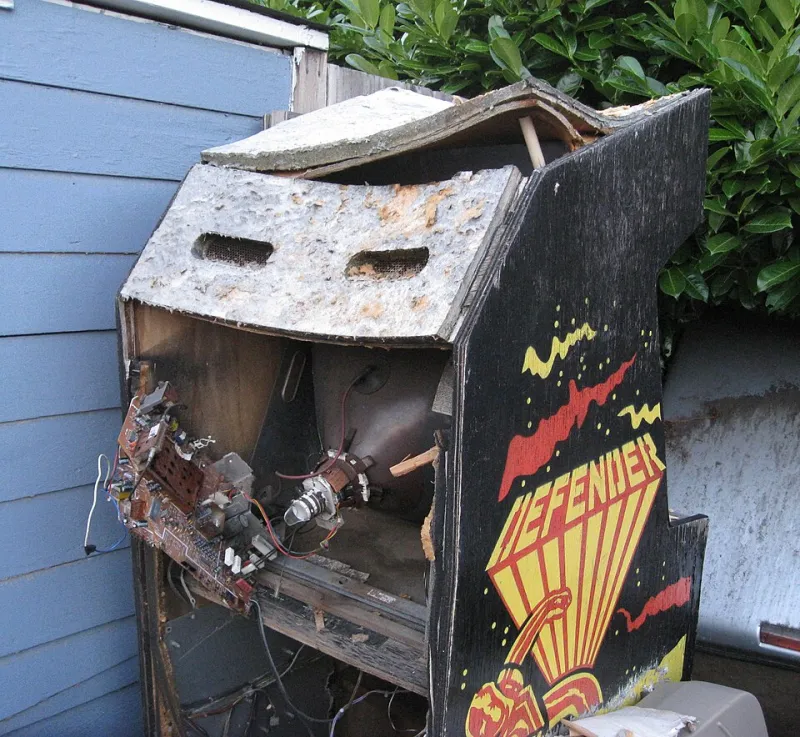
Photo: brewbooks from near Seattle, USA, CC BY-SA 2.0, via Wikimedia Commons
There's a cruel irony at the heart of retro gaming culture right now. At the exact moment that interest in classic games has never been higher — when prices are soaring, communities are thriving, and emulation hardware is more accessible than ever — the legal framework surrounding those same games is making it harder than ever to actually preserve them.
This isn't a hypothetical future problem. It's happening right now, and it's been quietly reshaping what the retro gaming community can and can't do for years.
The Clock Is Already Ticking
Here's something that doesn't get talked about enough: physical game media decays. Cartridge batteries die. Optical discs rot. Magnetic storage degrades. The average lifespan of a CD-ROM is estimated somewhere between 25 and 100 years depending on storage conditions — which sounds like a lot until you remember that some of the PlayStation and Saturn era titles people are scrambling to preserve right now are already pushing 30 years old.
For librarians, historians, and digital archivists, the solution has always been obvious: digitize, document, and distribute. That's exactly what institutions like the Internet Archive, the Video Game History Foundation (VGHF), and countless volunteer-run preservation projects have been doing for decades. But doing that work with commercial video games puts you directly in the crosshairs of copyright law — and corporations have deep pockets and patient legal teams.
The DMCA Problem Nobody Wants to Talk About
The Digital Millennium Copyright Act, passed back in 1998, was designed to protect digital content from piracy. In practice, it's become one of the biggest obstacles facing legitimate game preservation efforts. Under the DMCA, circumventing copy protection on software — even software that's 30 years old and no longer commercially available — is technically illegal without a specific exemption.
Every three years, the U.S. Copyright Office holds a rulemaking process where organizations can petition for exemptions. The VGHF and the Library Copyright Alliance have fought hard in these proceedings, winning limited exemptions that allow certain preservation activities inside physical library walls. But those exemptions come loaded with restrictions: the games generally can't be accessed remotely, can't be shared digitally, and can only be used for research or preservation purposes in controlled settings.
For the average retro gaming enthusiast trying to legally play a game that hasn't been sold in two decades? The law offers almost nothing.
When the Lawyers Show Up
The chilling effect of cease-and-desist letters on the preservation community is real and well-documented. In 2023, Nintendo — a company with a long, aggressive history of protecting its IP — targeted not just ROM sites but emulation-adjacent projects that had operated in legal gray areas for years. The closure of popular ROM hosting sites a few years prior had already sent shockwaves through the community, wiping out archives that contained games genuinely unavailable anywhere else.
Nintendo's position has always been that it actively re-releases its classic catalog through services like Nintendo Switch Online, making preservation arguments moot. But critics point out that the Switch Online library covers only a fraction of the full NES, SNES, and N64 catalogs — and that hundreds of licensed third-party titles from that era may never see official re-release due to tangled rights, expired licenses, or simple lack of commercial interest.
The VGHF published research in 2023 showing that 87 percent of classic games released before 2010 are out of print and commercially unavailable. That number is staggering. And yet, under current law, preserving those titles without authorization remains legally risky.
The Human Cost of Legal Uncertainty
Beyond the institutional battles, there are real human stories here. Emulation developers who have poured years of volunteer work into projects have received legal threats. Fan translators who spent thousands of hours making Japanese-exclusive titles accessible to English-speaking audiences have seen their work forcibly taken down. Historians attempting to document the full breadth of gaming history find themselves working around legal landmines.
One of the more heartbreaking patterns involves licensed games — titles built around TV shows, movies, or music from the '80s and '90s. When those licenses expire, the games don't just stop being sold. They become legally complicated objects that no company wants to touch. Nobody owns the right to re-release them cleanly, nobody has the incentive to relicense them, and so they just... disappear. Legally inaccessible and physically deteriorating.
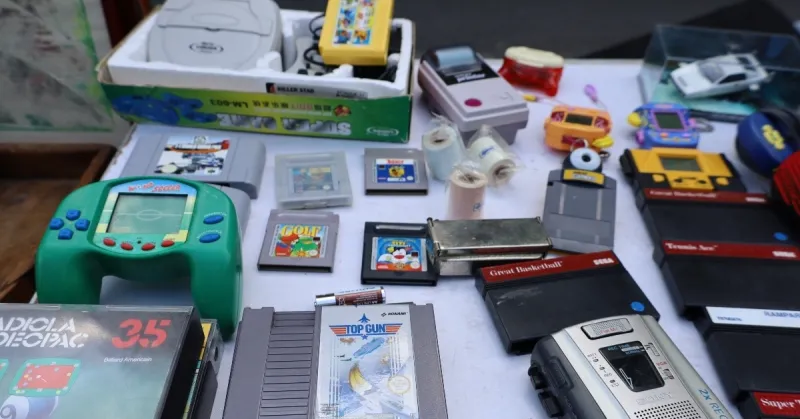
For collectors, this is part of why the hunt matters so much. Finding a complete-in-box copy of a licensed title that's never coming back to digital storefronts isn't just about nostalgia — it's about holding onto something that might otherwise be lost entirely.
What the Community Is Doing About It
The retro gaming community has never been great at sitting on its hands. Advocacy organizations like the VGHF continue pushing for broader DMCA exemptions and have been vocal in lobbying Congress for meaningful reform. Their argument — that cultural preservation should outweigh commercial interests for works that are no longer being sold — has gained some traction, but legislative change moves slowly.
Meanwhile, grassroots archivists continue their work, often operating quietly and accepting the legal ambiguity as a cost of doing something they believe matters. The Internet Archive's software collection remains one of the most significant repositories of playable classic software in existence, even as it faces ongoing legal pressure.
Some in the community have started pushing for a "preservation carve-out" modeled on what libraries already do with physical books — the idea that institutions should have the explicit legal right to preserve and provide limited access to out-of-print digital works, full stop, without navigating a maze of exemptions every three years.
A Question Worth Asking
At some point, this becomes a conversation about what we actually value as a culture. Video games are the defining artistic medium of the last 50 years. They shaped how entire generations think, play, and connect with each other. The idea that corporate IP law might determine which parts of that history survive and which parts rot away on failing hardware in someone's attic should bother more people than it currently does.
The retro gaming community understands this instinctively. Every collector who hunts down a rare cartridge, every archivist who documents a forgotten title, every developer who builds better emulation tools is pushing back against that erasure in their own way.
The legal fight is harder, slower, and less satisfying than finding a mint-condition copy of something rare at a flea market. But it might be the most important battle classic gaming culture is facing right now — and the clock is ticking on more than just the hardware.