Digs, Deals, and Dusty Cartridges: The Art of Hunting Retro Games at Yard Sales and Flea Markets
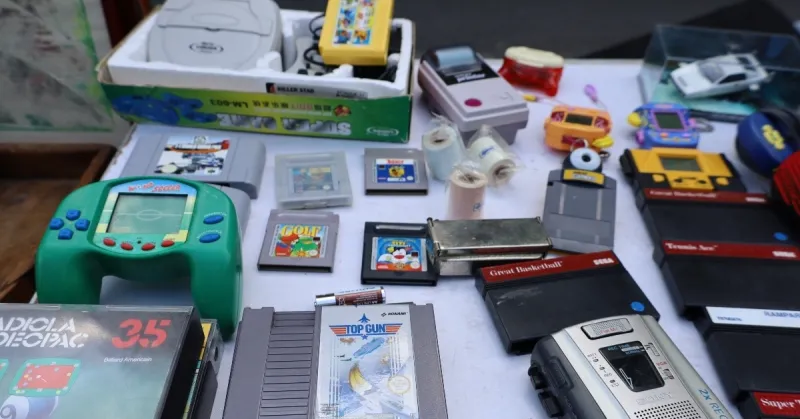
Photo: yard sale retro video games cartridges flea market vintage, via cdn.financebuzz.com
It's 6:47 on a Saturday morning. The coffee in your travel mug is still hot, the trunk of your car is empty, and you've got a hand-scrawled list of addresses pulled from Facebook Marketplace and Craigslist the night before. You're not a professional. You don't own a shop. But you know what a complete-in-box copy of EarthBound looks like, and you're willing to drive forty minutes on the off chance someone's grandmother is selling one for three bucks.
This is what retro game hunting actually looks like — not glamorous, not guaranteed, but absolutely electric when it pays off.
Across the United States, a loose-knit community of collectors, hobbyists, and straight-up obsessives has turned the humble yard sale and flea market circuit into the most unpredictable — and arguably most rewarding — corner of the retro gaming world. No eBay algorithms. No StockX pricing. Just you, a stranger, and a milk crate full of old games somewhere between a broken blender and a box of Reader's Digests.
Why the Secondhand Circuit Still Beats Everything Else
With dedicated retro game stores popping up in most mid-sized cities and online marketplaces offering near-instant access to virtually any title, you'd think the yard sale hustle would be dying out. It isn't. If anything, the community around it has grown more passionate.
The reason is simple: pricing inefficiency. Retro game stores and eBay sellers know exactly what they have. They've looked it up. They've priced accordingly. But the retired schoolteacher clearing out her late husband's basement? She has no idea that the copy of Mega Man X she's throwing in a box for fifty cents is worth sixty dollars to the right buyer. That gap between perceived value and actual value is where collectors live.
It's not exploitation — it's a market functioning exactly as markets do. Both parties agree on a price and walk away satisfied. The seller clears space and makes a few dollars. The buyer gets a piece of gaming history at a fraction of retail. Nobody loses.
The Unwritten Rules of the Hunt
Every subculture has its codes, and the retro hunting community is no different. Ask around, and experienced pickers will tell you the same things without much variation.
Get there early, but don't be a jerk about it. The best finds disappear fast, and serious hunters know to arrive at yard sales right as they open — sometimes earlier, if the seller is willing. But showing up forty-five minutes before start time and pressuring someone who's still setting up? That's bad form, and word gets around in local collector circles.
Know before you go. The hunters who consistently score big aren't just lucky. They've done homework. They know which games are region-locked, which titles had limited print runs, which publishers are worth looking for even if the specific game doesn't ring a bell. Walking into a sale cold and hoping for the best is a strategy, but it's not a good one.
Negotiate, but respect the ask. Lowballing someone into the ground on a game they've priced at five dollars isn't clever — it's just cheap. Most experienced collectors operate by a simple rule: if the price is fair, pay it. If it's a little high, make a reasonable counter. If it's already a steal, don't push your luck. Burning a seller's goodwill means they won't call you first next time they find a box of old Nintendo games in the attic.
Build relationships, not just collections. The flea market regulars who do this long enough stop thinking of it as a series of one-off transactions. They get to know vendors. They leave their numbers. They become the person a seller thinks of when they stumble across something old and game-shaped. That kind of network is worth more than any single find.
Stories from the Field
Talk to enough hunters and you'll start to hear the legends — the finds that sound almost too good to be true but absolutely happened.
There's the guy in Ohio who bought a shoebox of loose SNES cartridges for fifteen dollars and found a copy of Chrono Trigger buried under a pile of sports titles. There's the woman in rural Georgia who spotted a complete Nintendo World Championships cartridge — one of the rarest items in all of NES collecting — at an estate sale, priced as a generic gray cart at two dollars. She knew what it was. The seller didn't. She paid, said thank you, and drove home shaking.
These stories spread through online forums and Discord servers like campfire tales, and they serve a function beyond entertainment. They keep the community going. They remind every hunter who comes home empty-handed on a given weekend that the next trip might be the one.
The Psychology of the Dig
There's a reason people describe the hunt in almost addictive terms. The variable reward schedule — sometimes you find nothing, sometimes you find everything — is the same psychological mechanism that makes slot machines work. Except instead of pulling a lever, you're digging through a cardboard box. And instead of losing money, you're occasionally walking away with something genuinely rare.
For a lot of collectors, the hunt has become as meaningful as the collection itself. The games sitting on a shelf carry stories now. That copy of Castlevania: Symphony of the Night didn't come from Amazon. It came from a flea market in Phoenix, from a vendor who also sold bootleg sunglasses and didn't know what he had. That context makes it matter more.
Retro gaming was always about memory and feeling — the warmth of recognizing something from your childhood, the satisfaction of holding a physical object that connects you to a specific time. Hunting adds another layer. It makes you an active participant in the preservation of gaming history rather than just a passive consumer of it.
How to Start Your Own Circuit
If you've never done this before and you're thinking about trying, the barrier to entry is genuinely low. You need a phone, a basic knowledge of what's valuable (a few hours on Price Charting will get you there), and the willingness to wake up early on a Saturday.
Start by following local yard sale groups on Facebook. Apps like Yard Sale Treasure Map and Garage Sale Finder aggregate listings in your area and let you plan routes. Flea markets often have regular vendors who deal in old electronics and games — introduce yourself, let them know what you're looking for, and check back consistently.
Bring cash in small bills. Sellers almost never have change for a fifty, and showing up with exact change or near-exact change makes transactions smoother and leaves a better impression.
And keep your expectations flexible. Some weekends you'll find nothing worth buying. Others, you'll fill your trunk. The ratio is part of the deal.
The Bigger Picture
What's happening at these yard sales and flea markets every weekend is something a little larger than bargain shopping. It's an informal preservation network — one where games that might otherwise end up in a landfill get rescued, cleaned up, and returned to people who actually appreciate them.
The retro gaming market has plenty of high-dollar corners: auction houses, graded slabs, investment-grade sealed boxes. But the yard sale circuit operates on different values. It's democratic. It's accessible. And it's still one of the few places where a kid with twenty dollars in their pocket can walk away with a piece of gaming history.
That's worth waking up early for.