Eight Bits of Glory: Why the Commodore 64 Has Become the Holy Grail of Retro Computing
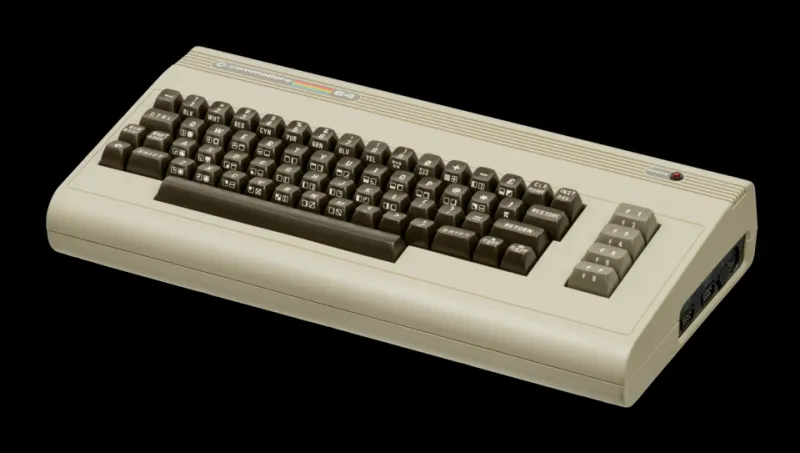
Photo: Evan-Amos, Public domain, via Wikimedia Commons
Somewhere in a garage in Ohio, a guy named Dave is paying $350 for a yellowed keyboard the size of a small coffee table. In a Los Angeles apartment, a 24-year-old who wasn't alive when the Berlin Wall fell is loading up a SID chip tracker and composing chiptune music on hardware her parents might have used to play Impossible Mission. And on any given weekend, eBay's completed listings for "Commodore 64" look less like vintage electronics sales and more like a bidding war for vintage Jordans.
The Commodore 64 — that glorious, chunky, beige slab of 1982 computing power — is back. Not in a nostalgic-wink, limited-edition-mini-console kind of way. We're talking about a full-blown secondhand market surge that has longtime collectors scrambling and newcomers paying prices that would have seemed absurd even five years ago.
So what's driving it? Turns out, it's a lot of things at once.
The Machine That Refused to Die
To understand the C64's current moment, you have to appreciate just how dominant it was during its original run. Commodore sold somewhere between 12 and 17 million units throughout the 1980s, making it the best-selling personal computer model of all time — a record it still holds. In the US, it was everywhere: in bedrooms, in schools, in the back rooms of Radio Shack stores. For millions of American kids, it was the first computer they ever touched.
But unlike a lot of retro hardware that coasts purely on nostalgia, the C64 never actually stopped being used. A dedicated community of developers, musicians, and hobbyists kept the platform alive through the '90s, the 2000s, and right up to today. Demoscene artists continued pushing its SID chip to new limits. Homebrew developers kept shipping new games. Online communities kept the flame burning when the mainstream moved on.
That continuity matters. When a new wave of collectors and curious gamers started looking for something real to hold onto — something with texture and weight and actual history — the C64 had receipts.
The Homebrew Effect
If you haven't poked around the C64 homebrew scene recently, you're missing something genuinely impressive. Titles like Galencia, Sam's Journey, and Mayhem in Monsterland aren't just charming throwbacks — they're technically accomplished games that push the hardware in ways commercial developers never bothered to explore back in the day. The community around platforms like CSDb (the Commodore Scene Database) and forums like Lemon64 has been producing quality software for decades, and that output has accelerated in recent years.
For younger gamers who discovered retro gaming through YouTube deep-dives or emulation rabbit holes, finding out that the C64 has an active, living development community is a genuine revelation. This isn't a museum piece. It's a platform people are still creating for. That distinction — between a dead system and a living one — is a huge part of what makes the C64 feel different from, say, hunting down an Atari 5200.
Collectors who've been in the scene for years will tell you the same thing: the homebrew community isn't just a bonus feature, it's the engine keeping demand high. Every new quality release is essentially a marketing event that reminds people the machine exists and is worth owning.
Aesthetics Matter More Than You'd Think
Here's something that doesn't get talked about enough in retro collecting circles: the Commodore 64 looks cool in a way that a lot of vintage hardware doesn't. That low-profile keyboard unit, the chunky function keys, the distinctive badge — it photographs beautifully on a desk. In an era where minimalist battlestations and carefully curated home office setups get thousands of likes on social media, the C64 fits right in as a statement piece.
This isn't shallow. Aesthetics drive collecting in every category, from vinyl records to vintage cameras, and gaming hardware is no exception. The C64 has a visual identity that's distinct without being garish. It reads as "serious machine" in a way that, say, a hot-pink Game Boy accessory doesn't. And for a certain kind of buyer — someone who wants their hobby to say something about their taste — that matters.
Interior design trends that favor analog textures, warm tones, and "vintage-modern" vibes have inadvertently made the C64 a lifestyle object. That's a weird thing to say about a 40-year-old computer, but here we are.
The SID Chip Is Basically a Superstar
No conversation about C64 culture is complete without talking about the SID (Sound Interface Device) chip, and what it means to the music community. The SID chip produced audio that was, for its time, genuinely ahead of the curve — rich, warm, expressive in ways that competing hardware couldn't touch. The sounds it produced became a defining texture of early gaming culture, and those sounds have had a long afterlife.
Chiptune musicians, electronic producers, and sound designers have been sampling and replicating SID tones for years. Bands like Machinae Supremacy built entire careers on SID-influenced sounds. The chip has been analyzed, cloned, and celebrated in academic papers and music festivals alike. Owning an original C64 means owning the real source of that sound — and for audio enthusiasts, that's not a small thing.
What's Driving the Price Spike
So what does all this mean for your wallet? In short: buying a clean, working Commodore 64 setup has gotten noticeably more expensive over the past few years. A complete system with the original power supply, a 1541 disk drive, and a monitor can easily run $400–$600 in good condition. Rare software, boxed games, and peripherals like the 1541 Ultimate II cartridge drive prices higher still.
Part of this is simple supply and demand — there are only so many working units left, and attrition from bad power supplies (the original PSUs are notorious for failing and taking the machine with them) shrinks the pool every year. Part of it is the broader retro gaming market heating up across the board. And part of it is the C64's specific cultural moment: new coverage, new homebrew releases, and new audiences all converging at the same time.
If you're thinking about getting into C64 collecting, the advice from veteran collectors is pretty consistent: don't wait. Prices have been trending up, not down, and the factors driving demand aren't going away anytime soon.
A Machine Worth the Hype
The Commodore 64's resurgence isn't a fluke or a manufactured trend. It's the result of decades of community investment paying off at exactly the moment the broader culture is ready to receive it. For longtime fans, it's a long-overdue recognition of something they always knew. For newcomers, it's a genuine discovery — a machine with depth, history, and a living community attached to it.
In a hobby that sometimes gets too focused on price guides and investment potential, the C64 is a reminder of what makes retro gaming and computing actually worth caring about: the connection between hardware, software, and the people who refuse to let either one be forgotten.