Quarters Not Required: Inside the Booming Home Arcade Scene Fueled by Gen X Nostalgia
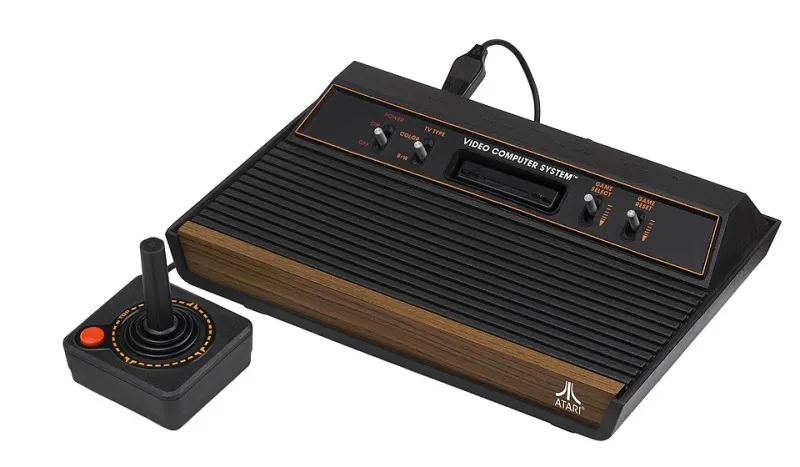
Photo: Evan-Amos, Public domain, via Wikimedia Commons
Somewhere in a suburb outside of Nashville, Tennessee, there's a two-car garage that hasn't seen a car in three years. In its place: a full-size Pac-Man cabinet, a restored Galaga machine, a custom-built four-player X-Men arcade unit, and a neon-lit bar setup with a custom cocktail cabinet running MAME. The owner, a 51-year-old IT manager named Dave, calls it "the Garage." His friends call it the best place to spend a Friday night in the zip code.
"I spent every quarter I had at the local Aladdin's Castle when I was a kid," Dave told us over email. "That arcade closed in 1994. I've been trying to get back there ever since."
Dave's story isn't unusual. Across the United States, a quiet but unmistakable boom is reshaping basements, garages, and spare bedrooms. The home arcade market — encompassing everything from full-size restored cabinets to plug-and-play bartop units to high-end custom builds — is now estimated to be worth somewhere in the neighborhood of $2 billion annually, and it's growing. The engine powering all of it? A generation of Americans who grew up feeding tokens into machines at the mall, and now have the disposable income to recreate that world on their own terms.
The Market Behind the Magic
The numbers tell a compelling story. Arcade1Up, the company perhaps most responsible for mainstreaming the home arcade concept, has reportedly sold millions of units since launching in 2018. Their scaled-down, officially licensed cabinets — covering everything from Street Fighter II to NBA Jam to Pac-Man — retail between $300 and $600 and have become a staple of big-box retailers like Walmart and Target.
But that's just the entry point. The deeper you go into the hobby, the more serious the money gets. Restored original arcade cabinets in working condition routinely sell for $800 to $3,000 depending on the title and condition. A fully restored Donkey Kong cabinet in excellent shape can fetch $4,000 or more. Custom-built MAME cabinets with high-end components, quality monitors, and hand-painted artwork can run $5,000 to $10,000 from skilled builders.
And then there are the game rooms themselves. A growing cottage industry of interior designers, custom fabricators, and neon sign makers now caters specifically to the retro gaming aesthetic. Companies sell reproduction arcade carpeting — yes, that garish, geometric, impossibly patterned carpet from your local arcade — by the square foot. It sells out regularly.
Why Now? The Psychology of Experiential Nostalgia
Spend any time talking to serious home arcade collectors and a few themes emerge almost immediately. This isn't just about the games. It's about recapturing an experience — a specific sensory memory tied to a time in life when things felt simpler and stakes felt lower.
Dr. Clay Routledge, a behavioral scientist who has written extensively on nostalgia, has described the emotion as a coping mechanism that helps people maintain a sense of identity and meaning during periods of stress or transition. It's not hard to connect those dots to a generation of Americans now in their 40s and 50s, navigating midlife in a world that moves faster than ever.
"When I walk into my game room, I'm twelve years old again," said Karen, a 47-year-old from suburban Chicago who has spent roughly $15,000 building out her basement over the past four years. "It's not escapism exactly. It's more like... I remember who I was before everything got so complicated."
That emotional resonance is something manufacturers understand deeply. Arcade1Up's marketing leans hard into it. So does Legends Arcade Factory, another major player in the space whose multi-game cabinets feature officially licensed titles and co-op play setups designed explicitly for the "gather the family around" moment.
The Collector Spectrum
It's worth noting that the home arcade world is not monolithic. There's a wide spectrum of engagement, and the community is remarkably welcoming across all of it.
At one end, you've got the casual buyer — someone who picks up an Arcade1Up Mortal Kombat cabinet at Walmart on Black Friday, puts it in the living room, and plays it occasionally with their kids. No shame in that game. That's a perfectly valid entry point.
In the middle, there's the dedicated hobbyist: someone like Dave or Karen, who has invested real money and real time into building a curated space. These folks tend to haunt estate sales, Facebook Marketplace, and specialized dealers like Dragon's Lair Arcade in San Antonio or Quarterworld in Portland, always hunting for that next piece.
And then there are the hardcore restorationists — the people who buy broken, graffiti-covered, gutted cabinets for $100 and spend six months and several hundred dollars bringing them back to factory condition. This is a community unto itself, with dedicated forums, YouTube channels, and an almost religious commitment to authenticity.
What's Driving the Industry Forward
Beyond nostalgia, a few practical factors are accelerating the market. The rise of remote work has made home entertainment spaces a genuine priority for American households. People are investing in their homes in ways they weren't a decade ago, and a dedicated game room has become a legitimate aspiration rather than an eccentric outlier.
Manufacturers have also gotten smarter. The quality of officially licensed plug-and-play products has improved dramatically. Legends Arcade's higher-end units now support WiFi game downloads, online leaderboards, and regular content updates — features that keep the hardware feeling fresh long after the initial purchase.
The secondary market has matured too. Platforms like eBay, Facebook Marketplace, and niche sites like Dragon's Lair Classifieds make it easier than ever to buy, sell, and trade original cabinets. Prices have climbed, but so has availability and transparency.
More Than a Hobby
What makes the home arcade boom genuinely fascinating — at least from where we sit here at Game Nostalgia — is what it says about how a generation relates to its own history. These aren't just game rooms. They're shrines. They're time machines. They're the physical embodiment of a cultural memory that an entire generation shares.
The arcades are gone. Most of the malls that housed them are gone too. But the games, the sounds, the art, the feeling of standing in front of a glowing cabinet with a pocket full of quarters? That's apparently worth billions of dollars to recreate.
And honestly? We get it completely.