Pocket-Sized and Loaded: Why Retro Gamers Are Swapping Original Hardware for Modern Emulation Handhelds
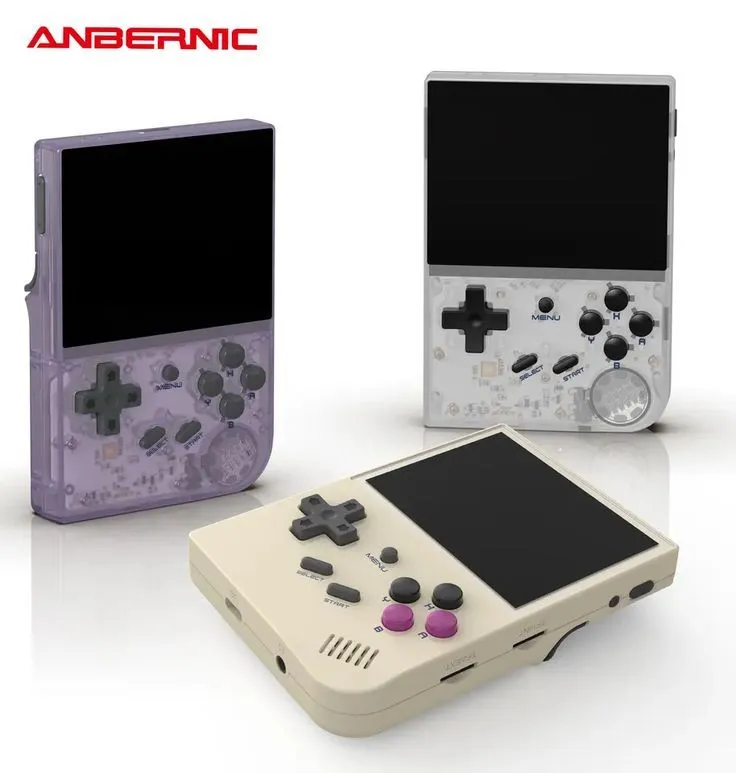
Photo: retro handheld emulator device Anbernic Miyoo gaming portable, via i.pinimg.com
There's a certain magic to holding a beat-up original Game Boy. The chunky buttons, the greenish screen, the satisfying click of a cartridge sliding home — it's pure childhood in your hands. But here's the thing: a growing number of retro gaming fans are quietly setting those original handhelds on the shelf and picking up something new. Not a Switch. Not a phone. Something that looks almost retro but runs just about everything.
We're talking about the modern retro handheld market — devices like the Anbernic RG35XX, the Miyoo Mini Plus, and a dozen other compact emulation machines that have flooded the market over the past few years. Sales data and community chatter both point to the same conclusion: this niche is booming, and American nostalgic gamers are a huge part of why.
The Numbers Don't Lie
While exact global sales figures are hard to pin down for smaller manufacturers, the signals are everywhere. Anbernic's product pages on Amazon regularly rack up thousands of reviews. Subreddits like r/SBCGaming and r/Handhelds have exploded in membership. Retro handheld content on YouTube pulls millions of views monthly. The Miyoo Mini — a palm-sized device that launched around $60 — became so popular that it sold out repeatedly and spawned a passionate modding community almost overnight.
For context, a clean, working original Game Boy Color on eBay typically runs $60–$100 these days, and a Game Boy Advance SP with a decent screen can easily hit $80–$150. Meanwhile, an Anbernic RG35XX H costs around $55 and runs Game Boy, GBA, SNES, Genesis, and even PlayStation 1 games out of the box. The value proposition is hard to argue with.
What Collectors Are Actually Saying
We reached out to a few members of our Game Nostalgia community to get their honest take on the shift.
Marcus, a 38-year-old from Columbus, Ohio who's been collecting since the late '90s, put it plainly: "I love my original hardware. I'm never getting rid of it. But I also have two kids, and I'm not handing my CIB Game Boy Advance SP to a seven-year-old on a road trip. I bought a Miyoo Mini Plus for like $65 and loaded it up. Best travel decision I've made."
That sentiment — using retro handhelds as a protective alternative to original hardware — came up again and again. Collectors aren't abandoning their Game Boys. They're preserving them.
Then there's the accessibility angle. Jess, a 32-year-old from Portland who got into retro gaming during the pandemic, explained that original hardware can feel intimidating and expensive for newcomers. "By the time you buy a GBA, a flash cart, and fix the screen, you're looking at $150 or more," she said. "I got an Anbernic, loaded it up, and I was playing Castlevania: Aria of Sorrow on my lunch break the same day. It just lowered the barrier for me."
Breaking Down the Best Budget Options
If you're thinking about dipping your toes in, here's a quick rundown of where most folks in the community are landing:
Miyoo Mini Plus (~$60–$70) — Still one of the most beloved entry points. Compact, great screen, and a thriving custom firmware scene (Onion OS is the go-to). Best for Game Boy, GBA, SNES, and Genesis era gaming.
Anbernic RG35XX H (~$55–$65) — A horizontal form factor that feels a lot like a Game Boy Advance. Solid build quality, good button feel, and handles up to PS1 comfortably. Hard to beat for the price.
Anbernic RG40XXV (~$75–$85) — Step up from the entry level. Bigger screen, better battery, and pushes into Nintendo DS and Dreamcast territory. Great for gamers who want a little more headroom.
Retroid Pocket 4 (~$100–$150) — For those ready to spend a bit more, this one runs Android and handles PS2 and GameCube emulation. Less "pure retro" but incredibly versatile.
Most of these devices run Linux-based custom firmware and can be loaded up via a microSD card. Setup takes an afternoon and a little patience, but the community documentation — especially over at Retro Game Corps — is genuinely excellent.
The Preservation Question
Here's where things get a little more philosophical. One of the most interesting tensions in this conversation is about game preservation. Original Game Boy cartridges are aging. Battery-backed saves are dying. Screens are yellowing. For a lot of collectors, the idea that their childhood games are slowly degrading is genuinely distressing.
Emulation handhelds sidestep some of that anxiety. Your save files don't die. The games don't wear out. You can back everything up. And for fans who care deeply about actually playing classic titles rather than just owning them, that reliability matters.
That said, plenty of purists in our community are quick to point out that emulation isn't perfect. Input lag, accuracy issues, and the intangible feel of real hardware are real considerations. Nobody's saying these devices replace the original experience entirely — but for everyday play? They're remarkably close.
So, Are You Ready to Make the Switch?
If you're a collector, the answer is probably: keep both. Your original hardware is part of history, and its value — both sentimental and financial — isn't going anywhere. But if you want something you can toss in a bag, hand to a friend, or just use to replay Pokémon Crystal on a Tuesday night without worrying about a dying save battery, a modern retro handheld might be the best $60 you spend this year.
The Game Boy era shaped a generation of American gamers. These little devices are a love letter to that era — just with a few modern conveniences tucked inside.