Ink and Pixels: How Gaming Magazines Ruled the World Before the Internet Took Over

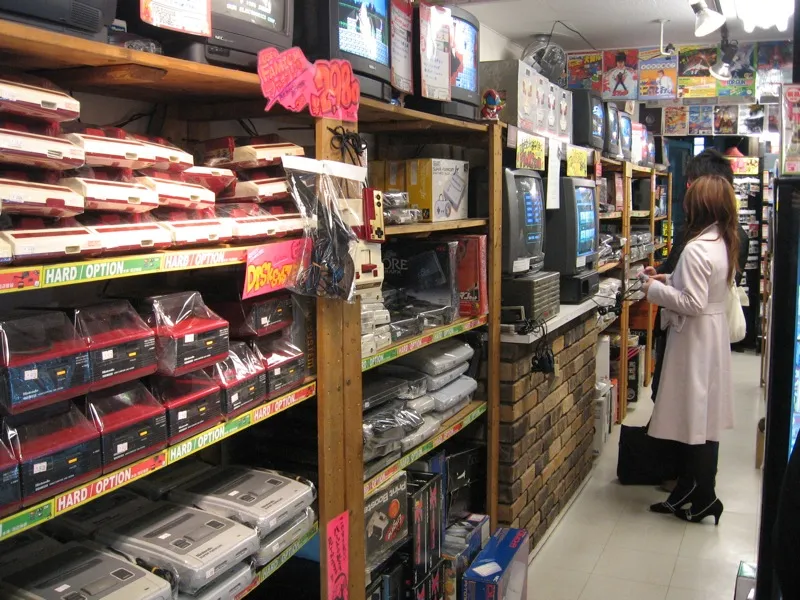
Photo: Shixart1985, CC BY 2.0, via Wikimedia Commons
There's a specific kind of memory that a lot of retro gamers carry around like a worn cartridge — the feeling of checking the mailbox and finding the latest issue of Nintendo Power waiting inside. You'd tear off the plastic sleeve before you even made it back to the front door. By dinner, it was dog-eared, highlighted in your brain, and probably already being quoted to your friends at school the next morning.
Gaming magazines weren't just publications. They were community hubs, cheat repositories, hype machines, and trusted friends — all wrapped up in glossy print and delivered to your door once a month. And in a world where the internet didn't exist to answer every question in 0.4 seconds, they were absolutely indispensable.
The Big Three and What Made Them Different
If you grew up gaming in the late '80s and '90s, you probably had a loyalty — maybe even a fierce one. Nintendo Power was the house organ, the official voice of Nintendo of America, launched in 1988 and landing in millions of households through the Nintendo Fun Club. It was polished, optimistic, and almost suspiciously enthusiastic about every game it covered. But kids didn't care about editorial independence. They cared about the Super Mario Bros. 3 coverage that dropped before the game even hit shelves in the US, complete with full maps and power-up guides that felt like classified intelligence.
Electronic Gaming Monthly — EGM to everyone who loved it — came at gaming from a different angle. It was louder, more irreverent, and packed with import coverage that made it feel like a window into gaming worlds American kids couldn't otherwise access. The four-reviewer format for scoring games was genuinely innovative, giving readers a sense of debate rather than a single authoritative decree. And those April Fools' jokes, like the infamous Sheng Long hoax in Street Fighter II, became legendary in their own right.
GamePro landed somewhere in the middle — broader in scope, willing to cover everything from the NES to the TurboGrafx-16, and written in a style that felt like it was authored by the coolest older kid on your block. Its Pro Tips, printed in little callout boxes throughout the reviews, were pure gold. Short, punchy, and often genuinely useful, they were the original gaming tweet.
The Map Posters and Pull-Out Guides Nobody Could Throw Away
Here's something modern gaming media simply cannot replicate: the physical artifact. Nintendo Power was famous for its fold-out maps — massive, detailed layouts of game worlds that you'd pin to your bedroom wall like a general studying a battlefield. These weren't just helpful. They were cool. Having a poster-sized map of Hyrule or Zebes on your wall was a statement about who you were.
The pull-out strategy guides tucked into the middle of issues were equally treasured. Some kids carefully removed them and filed them away. Others left them in the magazine and just bent the spine back so far it eventually cracked. Either way, those guides got used. They got stained with pizza grease and marked up with pencil notes. They were living documents.
No PDF download or Google Doc has ever felt like that. There's a reason retro collectors today pay real money for complete, unmarked copies of old Nintendo Power issues. The physical form was part of the experience.
Letters, Tips, and the Original Gaming Community
Before Discord servers and subreddits, gaming magazines ran letters sections that functioned as a surprisingly rich community space. Readers submitted questions, shared discoveries, bragged about high scores, and occasionally called out the editors on bad reviews. Nintendo Power's "Counselor's Corner" gave readers a direct line — or at least the illusion of one — to actual game counselors who could help them past a stuck point.
This was community-building in slow motion. You'd submit a letter, wait six weeks, and maybe see your name in print. It sounds impossibly quaint now, but that lag time created something modern platforms don't often produce: anticipation. When your letter got published, it felt like a genuine achievement. You were part of the conversation.
The tip submission culture was just as vibrant. EGM and GamePro ran reader-submitted secrets and glitches, which meant any kid with a sharp eye and a free afternoon could theoretically see their discovery printed and read by hundreds of thousands of people. Gaming knowledge wasn't locked away in corporate vaults — it was democratized through the mail.
Developer Access That Felt Genuinely Rare
One thing that often gets overlooked when people talk about retro gaming magazines is the quality of the developer coverage. These publications ran interviews with creators at a time when game developers were still somewhat mysterious figures — architects of worlds that kids could barely imagine building. A sit-down with Shigeru Miyamoto or a behind-the-scenes look at a Sega Genesis development studio felt extraordinary, because it was extraordinary.
Modern gaming has more developer access than ever, thanks to social media, YouTube channels, and convention coverage. But paradoxically, that abundance has made individual pieces of developer insight feel less significant. When EGM ran a two-page spread on the making of Mortal Kombat, that was the definitive account. You read it carefully. You remembered it. There wasn't a competing podcast, a Reddit AMA, and a twelve-part YouTube documentary series saying something different.
What Disappeared When the Magazines Did
Nintendo Power published its final issue in December 2012. EGM folded in 2009, briefly revived, then faded again. GamePro shut down in 2011. The reasons were obvious — the internet had already won the information war by then, and print advertising revenue had collapsed. From a pure business standpoint, the magazines never had a chance.
But what went with them was harder to quantify. There was a curatorial voice that the best gaming magazines carried — a sense that a real human being had played this game for a long time, thought carefully about it, and was sharing their honest take in a format that rewarded careful reading. The internet gave us speed and volume. It didn't always give us that.
Retro gamers who still collect old issues aren't just chasing nostalgia for the games themselves. They're chasing that feeling of being part of a curated world — one where someone had done the work of sorting through everything and presenting it in a package worth sitting down with. A physical object that didn't demand anything from you except your attention.
The Shelf Is Still There
If you've got a box of old Nintendo Power issues in a closet somewhere, do yourself a favor and pull one out. Flip through it slowly. Notice the ads for games that never came out, the reader art in the back pages, the reviews written with a sincerity that feels almost alien by today's standards. It's a time capsule — not just of gaming history, but of a particular way of being a gamer.
That way of being wasn't worse than what we have now. It was just different. Slower. More communal in a strange, asynchronous way. And for a lot of us, it's where the love of gaming really took root.
The magazines are gone, but the memories they printed are still very much in circulation.