Up, Up, Down, Down: How Cheat Cartridges Rewrote the Rules of a Gaming Generation
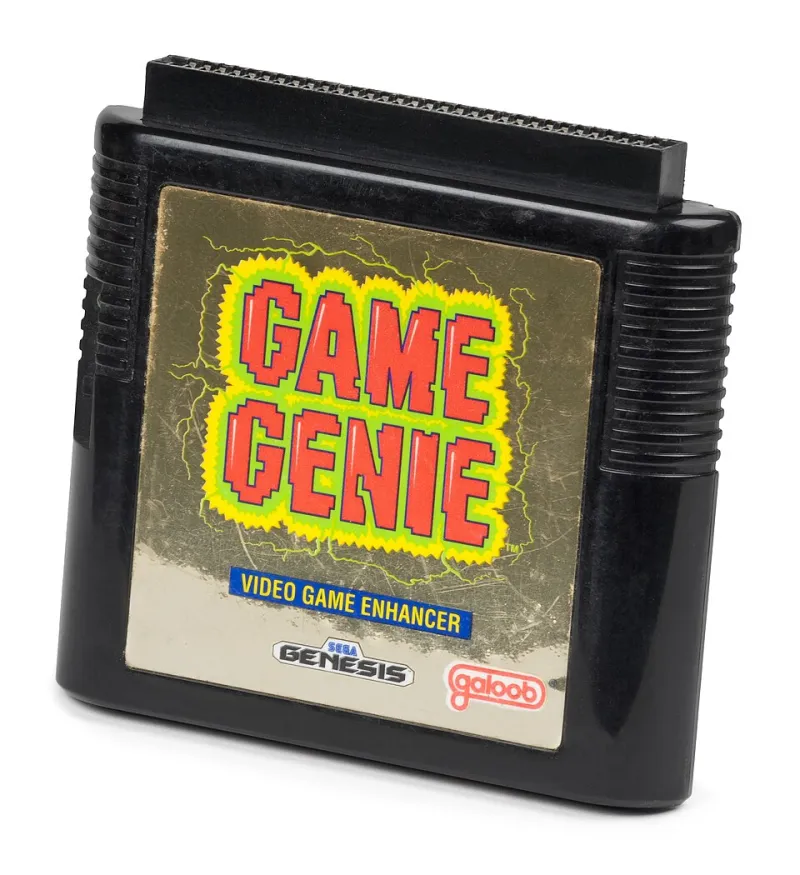
Photo: Evan-Amos, CC BY-SA 3.0, via Wikimedia Commons
Picture this: it's 1990, and you've been stuck on the same level of Battletoads for three weeks. Your thumbs are raw. Your patience is gone. Your older brother swears there's a way to get infinite lives, but he heard it from a kid at school who heard it from his cousin in another state, and nobody can verify if it actually works. Then your neighbor shows up with a Game Genie, and suddenly the entire game opens up like a flower. You're invincible. You have unlimited continues. You're finally seeing the ending screen.
That moment — the moment the rules dissolved — is something a very specific generation of American gamers remembers with a particular kind of warmth. Cheat cartridges weren't just accessories. They were a philosophy. And the culture they created was a lot more interesting than the simple shortcut label suggests.
What Were These Things, Exactly?
For anyone who needs a quick primer: cheat cartridges were pass-through devices that sat between your game cartridge and your console. The two big names were the Game Genie, released by Codemasters and distributed by Galoob in the US starting in 1990, and the Action Replay (sometimes called the Pro Action Replay), which was particularly popular in its various console iterations through the '90s. Both worked by intercepting the data passing between the game and the console, allowing players to input codes that modified values in real time — things like health, lives, speed, invincibility, or level access.
The Game Genie came with a code book and leaned into a friendly, accessible image. The Action Replay was more technical, eventually offering memory editing features that made it a tool as much as a toy. Together, they defined an era.
Nintendo, famously, was not a fan. The company sued Galoob over the Game Genie in 1990, arguing it constituted an unauthorized modification of their software. Galoob won. The ruling — which found that the Game Genie didn't create a fixed copy of the game — was a landmark moment in gaming law, and it essentially established that players had the right to modify their experience at home. For 1990, that was a genuinely radical decision.
The Playground Economy of Codes
Here's something that gets lost when people talk about cheat cartridges purely as a gaming tool: they created a social economy. Codes were currency. If you had a code that nobody else knew — a secret that unlocked a hidden mode, or a glitch that let you walk through walls — you had social capital. You were the kid with the knowledge.
Before GameFAQs, before YouTube tutorials, before Reddit threads with 4,000 comments, information about cheat codes spread the same way rumors did: person to person, with all the distortion that implies. Codes got misremembered. Letters got swapped. Kids would share a code with total confidence and it would turn out to be wrong, or it would work on one version of the game but not another, or it would do something completely unexpected — crash the game, unlock a weird graphical glitch, skip you three levels ahead by accident.
That unpredictability was part of the magic. Using a cheat cartridge wasn't a passive experience. It was experimental. You were a little bit of a scientist, entering codes and watching what happened, documenting results in a notebook, sharing findings at lunch.
"I had a whole spiral notebook full of codes I'd collected from friends, gaming magazines, and the code book that came with the Game Genie," says Marcus, a collector based in Chicago who's been in the retro scene for over a decade. "Half of them didn't work the way they were supposed to, but figuring out what they did do was its own kind of fun."
Democratizing Difficulty
There's a serious point buried inside all this nostalgia, and it's worth pulling out: cheat cartridges made games accessible in a way that the industry itself often failed to do.
NES and SNES-era games were, by modern standards, punishingly hard. Not always because of good design — sometimes just because difficulty was used to pad out short games and justify rental fees. A lot of kids who wanted to experience the story of a game, or see its later levels, or just have fun without the frustration of dying on the same screen for the fortieth time, had no legitimate path to do that. The Game Genie gave them one.
In that sense, cheat cartridges were an early, unofficial accessibility feature. They let players tune the experience to their own skill level and patience threshold. The kid with less time to practice could still enjoy the game. The younger sibling could keep up. That's not a trivial thing.
The contrast with today is stark and a little uncomfortable to sit with. Modern games have built-in difficulty settings, assist modes, and accessibility options — which is genuinely great. But they also have microtransactions, paid DLC that unlocks content, and "booster packs" that are essentially Game Genie codes sold back to you at $4.99 a pop. The ethics of that arrangement, compared to a one-time hardware purchase that let you modify your own game, are worth thinking about.
The Collector's Perspective
For retro collectors, cheat cartridges occupy an interesting niche. They're not the flashiest items on a shelf, but they carry a disproportionate amount of memory for people who used them. Finding a clean Game Genie with its original code book is genuinely satisfying — not because it's worth a fortune (most aren't), but because it's a complete artifact of a very specific moment in gaming culture.
Action Replay units, particularly later versions for the PlayStation and Nintendo 64, have developed a more dedicated collector following because of their technical depth. These weren't just code-entry devices — they were early hacking tools, capable of things that felt almost transgressive at the time. Collectors who are also interested in gaming preservation and ROM culture tend to have a particular appreciation for them.
"The Action Replay was basically the first modding tool a lot of people ever touched," says Priya, who runs a retro hardware repair shop in Austin. "It taught a generation of kids that software wasn't fixed, that you could poke at it and see what happened. A lot of people who work in game development or software today probably got their first taste of that idea from one of these cartridges."
The Legacy That Keeps on Giving
The DNA of the cheat cartridge lives on in ways both obvious and subtle. Speedrunning communities rely on deep knowledge of game memory and exploits that would have been right at home in a Game Genie code book. Cheat Engine, the PC software tool, is a direct descendant of the same philosophy. Game mods, debug modes, and New Game Plus features all carry echoes of the cartridge era's spirit of "what if the rules were different?"
More than that, cheat cartridges normalized a kind of playful irreverence toward games that feels healthy in retrospect. Games are meant to be fun. If a game stops being fun, you should be able to do something about that. The idea that there's a "wrong" way to enjoy a piece of entertainment you paid for is a relatively recent invention — one the industry has some financial incentive to promote.
The Game Genie generation knew better. They had the codes. And they weren't afraid to use them.