Still Pressing Start: Catching Up With the Coders Behind Your 8-Bit Childhood

Somewhere in suburban Ohio, a 71-year-old man still gets emails from strangers about a game he finished in 1987. They want to know about a hidden room. They want to know if the infamous glitch on level four was intentional. They want to tell him — sometimes in paragraphs longer than the game's entire manual — what his code meant to them when they were nine years old.
He reads every one of them.
The People Behind the Pixels
For most of us, the names on those tiny title screens were just part of the intro we mashed through to get to the game. But those names belonged to real people — mostly in their twenties at the time, working out of cramped offices in Kyoto, Redmond, Tokyo, and a surprising number of American garages. Today, many of them are retired, grandkids in the picture, and finally willing to talk.
And what they talk about isn't always what fans expect.
Take crunch, for example. Nobody called it that back then. One level designer we spoke with described the final months before a cartridge shipped as "living at the office with a sleeping bag and a vending machine." Memory was so tight that compression tricks were invented out of desperation, not genius. "People write essays about our clever bank-switching," he laughed. "We were just trying to make it fit. We had no choice."
Secrets They Never Patched Out
Every retro fan has a favorite legend: the hidden warp zone, the developer room, the weird glitch that lets you skip half the game. So we asked the obvious question — how many of these were on purpose?
More than you'd think, and fewer than the forums claim.
One former sound engineer admitted that a certain famous "hidden message" in a beloved NES title was actually a memory dump artifact that testers found charming, so the team left it in rather than hunt down the bug. "It was cheaper to call it a secret than to fix it," he said. "Forty years later, people write dissertations about it."
Others were deliberate. Debug rooms left in because removing them risked breaking something else. Warp shortcuts designed so the team could test late levels quickly — then kept in because playtesters loved them. The line between "feature" and "bug" was blurrier than anyone admits, and the people who drew that line are the only ones who know where it really was.
Watching Speedrunners Tear It All Apart
Here's the part that gets emotional. These developers spent months building games meant to be beaten in a few hours, maybe replayed a handful of times. Now they can watch a teenager in Texas finish their game in under five minutes, frame-perfect, using tricks the original team never imagined.
You'd expect it to sting. Mostly, it doesn't.
"At first I didn't understand it," one programmer told us. "Then I watched a run live and realized they know my game better than I do. They found things in there I'd forgotten." Another described it as "seeing your kid grow up and do something you never could."
Not everyone's a fan of every trick, of course. One designer sheepishly admitted he still thinks a certain wall-clip technique is "cheating," then caught himself and laughed: "It's been thirty-five years. I should probably let it go."
Why Their Stories Matter Now
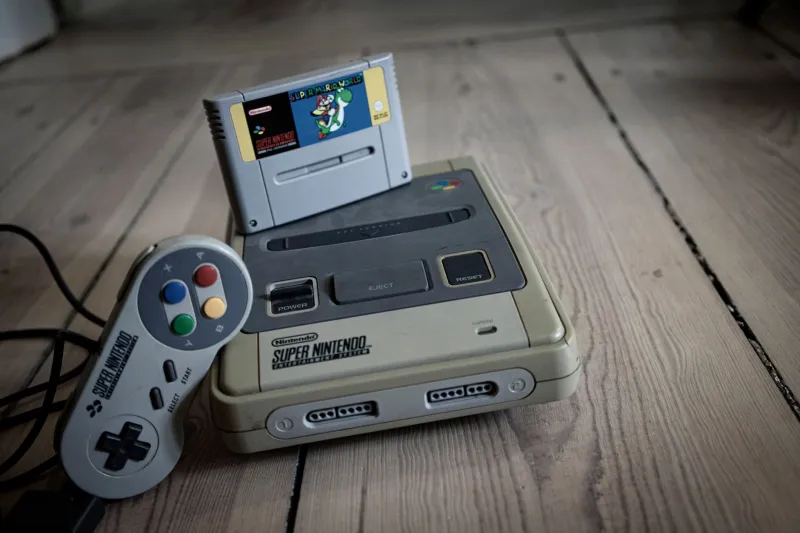
There's a clock ticking on all of this. The people who built the foundation of the American gaming childhood — the quarters at the pizza parlor, the Saturday morning SNES sessions, the Christmas morning cartridge — are in their sixties and seventies. Every year, more of their firsthand knowledge disappears.
That's part of why preservation efforts and developer interview projects have exploded in the retro community. Documentaries, fan-run interview archives, and convention panels at places like the Midwest Gaming Classic have turned these once-anonymous credits into celebrities of a very specific kind — famous to a few hundred thousand people, anonymous to everyone else.
If you ever get the chance to meet one of them, do it. Buy them a coffee. Ask about the sleeping-bag crunch months, the bugs that became legends, the compression tricks born of desperation. And if you want to make their decade, tell them what their game meant to you.
Because the credits rolled on their careers a long time ago. But for the people who played their work, the game never really ended.